
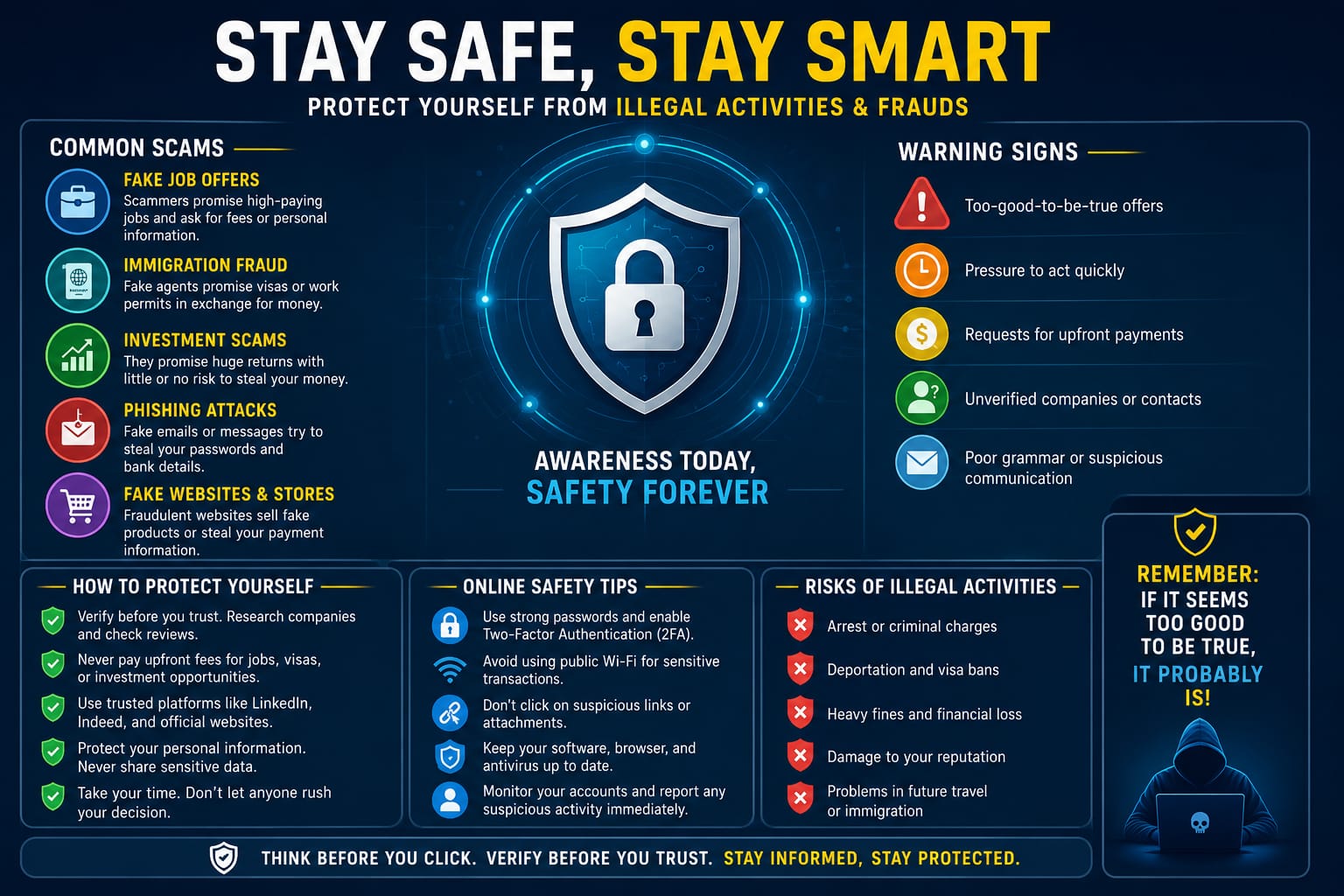

In today’s digital world, scams and illegal activities are becoming more common across the globe, especially in Western countries such as the United States, Canada, the United Kingdom, and many European nations. Thousands of people fall victim to fake job offers, online fraud, identity theft, and illegal schemes every year.
Many scammers target people looking for jobs, online income opportunities, immigration help, or fast financial success. Because of this, it is extremely important to understand how these scams work and how to protect yourself from becoming a victim.
This article explains the most common types of scams, warning signs to watch for, and practical ways to stay safe from illegal activities and fraud.
What Are Illegal Activities and Scams?
Illegal activities are actions that break the law. These may include:
- Fake documents or identity fraud
- Unauthorized work or illegal employment
- Financial fraud and money laundering
- Online scams and phishing attacks
- Fake visa or immigration schemes
- Identity theft
A scam is a dishonest scheme designed to steal money, personal information, or access to accounts by tricking people.
Scammers often appear professional and trustworthy, making it difficult for people to recognize fraud immediately.
Common Scams in Western Countries
1. Fake Job Offers
One of the most common scams involves fake employment opportunities. Victims receive messages through email, WhatsApp, Telegram, or social media promising:
- High salaries
- Easy remote jobs
- Visa sponsorship
- No experience required
- After gaining trust, scammers ask for:
- Registration fees
- Visa processing payments
- Training costs
- Personal documents
Legitimate companies rarely ask candidates to pay money upfront.
2. Immigration and Visa Scams
Many people searching for opportunities abroad become targets of fake immigration consultants or agents.
- Scammers may promise:
- Guaranteed visas
- Fast immigration approval
- Work permits without legal requirements
- They usually demand large payments and disappear afterward.
- Always verify immigration services through official government websites.
3. Investment and Crypto Fraud
Online investment scams are increasing rapidly. Fraudsters promote:
- Guaranteed profits
- “Double your money” schemes
- Fake cryptocurrency investments
- Unrealistic returns in a short time
If something sounds too good to be true, it usually is.
4. Phishing Scams
Phishing attacks attempt to steal personal information through fake emails, messages, or websites.
Victims may receive alerts pretending to be from:
- Banks
- PayPal
- Amazon
- Government agencies
- Social media platforms
These fake messages ask users to click links and enter passwords or banking information.
5. Fake Online Stores and Websites
Some websites are designed to look professional but exist only to steal money or payment details.
Common warning signs include:
- Extremely low prices
- No customer support
- No verified reviews
- Suspicious payment methods
Always research websites before making purchases.
Warning Signs of a Scam
Understanding scam warning signs can help you avoid major problems.
Be careful if you notice:
- Unrealistic promises of money or success
- Pressure to act quickly
- Requests for upfront payments
- Poor grammar or suspicious communication
- Unverified social media accounts
- No official company information
- Requests for passwords or banking details
Professional organizations operate transparently and legally.
Risks of Getting Involved in Illegal Activities
Some people knowingly or unknowingly become involved in illegal work or fraud schemes. The consequences can be serious.
Possible risks include:
- Arrest or criminal charges
- Deportation from a country
- Visa bans or immigration problems
- Financial loss
- Identity theft
- Damaged reputation
Even participating in suspicious online activities can create legal trouble in some countries.
How to Protect Yourself from Fraud and Illegal Activities
1. Verify Everything
Before accepting any offer:
- Search the company online
- Read reviews
- Check official websites
- Verify contact information
Legitimate businesses have transparent information.
2. Never Pay Upfront Fees
Be cautious if someone asks for money for:
- Jobs
- Visa approvals
- Lottery winnings
- Investment opportunities
Real employers usually do not charge hiring fees.
3. Use Trusted Platforms
For jobs and professional opportunities, use reliable platforms such as:
- Indeed
- Glassdoor
Avoid random social media offers from unknown people.
4. Protect Personal Information
Do not share:
- Passport copies
- National ID numbers
- Banking details
- Passwords
- Verification codes
unless you are certain the source is legitimate.
5. Enable Online Security Features
Improve your online safety by:
- Using strong passwords
- Enabling two-factor authentication (2FA)
- Updating software regularly
- Avoiding suspicious links
- Using antivirus protection
Cybersecurity is essential today.
How to Identify Genuine Opportunities
Legitimate opportunities usually include:
- Professional communication
- Official websites and email addresses
- Clear terms and conditions
- Interviews or verification processes
- Legal documentation
Scams often rely on urgency, emotional pressure, and unrealistic promises.
The Importance of Awareness
Education and awareness are the strongest defenses against fraud. Many scammers succeed because people act emotionally or too quickly.
Take time to research before making decisions involving:
- Money
- Jobs
- Immigration
- Online investments
- Personal information
Being careful can save you from major financial and legal problems.
Conclusion
Illegal activities and scams continue to grow worldwide, especially online. While many scammers target people searching for better opportunities, there are effective ways to stay protected.
Always verify information, avoid unrealistic offers, protect your personal data, and use trusted platforms when dealing with jobs, investments, or online services.
Remember:
A genuine opportunity will never pressure you into making rushed decisions or sending money without proper verification.
Staying informed and cautious is the best way to protect yourself and your future from fraud and illegal activities.
